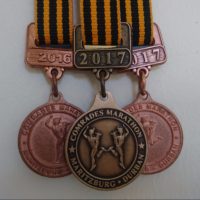
The event allocates 20,000 slots, and every year all of them get gobbled up by runners craving that whiff of glory! 🙂 I am not aware if there is an edition of the race where all 20,000 entrants have showed up on race day, but I doubt so. What is an established fact though is that the percentage of finishers is quite lower than the number of starters. This piece attempts to fit together that puzzle of why this is the case.
Finishing Comrades is considered a prestigious honour. I have even heard people who hold the view that one is not a runner until one completes the race; I will not risk an opinion in this regard – no comment. It is that status attached to the race then that leads people into all sorts of undue pressure.
Readiness
While there are many people who take up running without Comrades as one of their ambitions, it doesn’t take long once one mixes with the running crowd to catch the bug and become a Comr-addict. In the spirit of excitement and sometimes well-meaning, but misguided advice, one may jump onto the Comrades way too early for their personal abilities. While I am not in a position to offer expert advice on reliable measures to be used to check readiness, I can only relate what I did to check my own readiness. I insisted on running every marathon and ultra available between Oct and May, and for each of these I pushed myself to move as far away from the base qualifying time as possible. It’s not a silver bullet, but if it ever helps you, credit me. 🙂
Group Pressure
We also can’t rule out the possibility that one belongs to a body/grouping that preaches and promotes excellence, and such excellence may subtly [but informally] be measured in things such as the furthest distance one has completed or even the fastest time one has completed the distance. While this kind of pressure may not be the official position of a grouping, constant references to the successes of the “best performers” may drive one to chase unrealistic goals in the name “improving yourself”. The key here is knowing yourself, being realistic to your limitations, and working with your abilities. If it happens naturally that you are fast runner, enjoy the benefits. Yet, if even after putting in all your best effort into training, the best you can produce is a sub-finish result – work with it, own it. I am still a firm believer in the role of talent over hard work, but that’s a topic for another day.
Own your race!
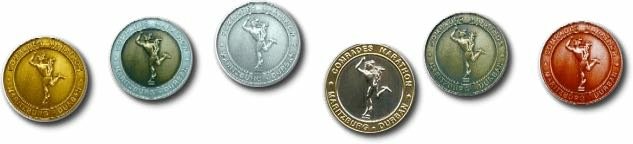
Back to the 20,000 entrants. The reality of varying abilities is reflected in how the race organisers recognise the efforts of the participants. The race has six medal categories as follows:
| Gold | – First 10 Men and Women |
| Wally Hayward | – Position 11 to sub 6hrs 00min |
| Silver | – 6hrs 00min to sub 7hrs 30 min |
| Bill Rowan | – 7hrs 30 min to sub 9hrs 00min |
| Bronze | – 9hrs 00min to sub 11hrs 00min |
| Vic Clapham | – 11hrs 00min to sub 12hrs 00min |
The table above has been extracted directly from the Comrades website and has not been modified.
For me, these categories distinguish the varying talent levels. These also differentiate professional runners from social runners. I am a social runner. To me that means, finishing within the cut-off time of 12 hours is more important than the colour of my medal. Indeed, I have witnessed people who felt cut-up for missing a Silver and getting a Bill Rowan instead. Damn, I never even allow myself to dream about Bill Rowan 🙂 🙂 🙂
At the end of the day, you face that road alone. Chase your own targets. Run for yourself. If you are faster than most of your peers, good for you. It is not your business to ridicule their efforts and limitations. If you are slower than most of the crowd, remember, you chose this life – make the best of what your abilities allow.
Till next time, Happy Running! 🙂
0 Comments
2 Pingbacks